MCP vs A2A vs ACP vs AP2: Agentic Commerce Protocols Compared (2026)
Which protocol does what — and how to choose the right stack for agent-to-agent commerce
Table of Contents
- Key Takeaways
- Table of Contents
- Protocol Comparison at a Glance
- MCP — Model Context Protocol
- A2A — Agent-to-Agent Protocol
- ACP — Agentic Commerce Protocol
- AP2 — Agent Payments Protocol
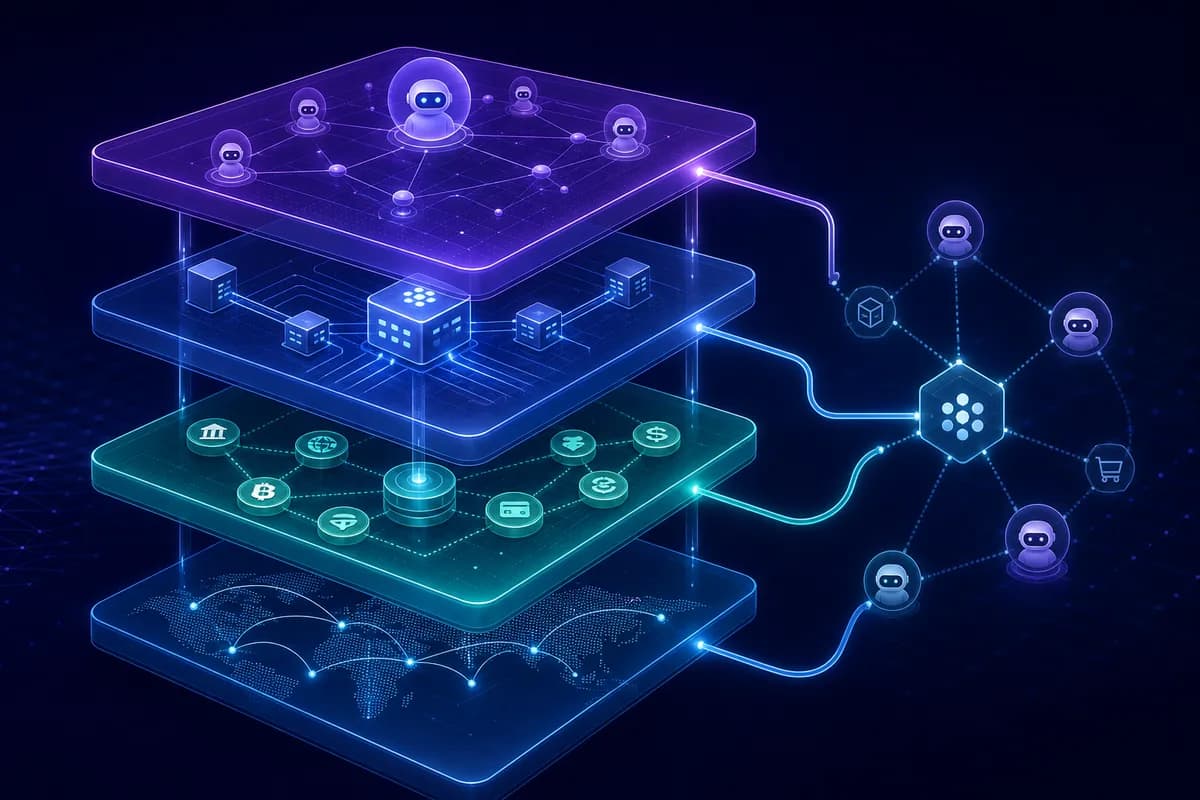
- How the Protocols Stack Together
- Which Protocol Should You Implement First?
- Implementation Checklist by Business Type
- Frequently Asked Questions
Agentic commerce runs on protocols — open standards that let AI agents share context, communicate with each other, initiate purchases, and authorize payments. Four protocols dominate the landscape in 2026: MCP (Model Context Protocol), A2A (Agent-to-Agent Protocol), ACP (Agentic Commerce Protocol), and AP2 (Agent Payments Protocol).
They are not competitors. They solve different layers of the stack. Confusing them leads to over-engineering (building A2A when you only need MCP) or security gaps (enabling agent checkout without AP2-style payment mandates). This comparison is the technical companion to our agentic commerce overview and preparation guide.
Key Takeaways
- MCP (Anthropic) — agents share tools and context across systems
- A2A (Google) — agents communicate, negotiate, and coordinate tasks with each other
- ACP (OpenAI + Stripe) — in-chat purchases inside AI interfaces like ChatGPT
- AP2 (Google + payment networks) — cryptographically signed autonomous payments
- Most production stacks use 2–3 protocols together, not one in isolation
- Start with MCP + your existing payment gateway; add A2A when seller agents negotiate; add AP2 when autonomous spending needs audit trails
Table of Contents
- Protocol Comparison at a Glance
- MCP — Model Context Protocol
- A2A — Agent-to-Agent Protocol
- ACP — Agentic Commerce Protocol
- AP2 — Agent Payments Protocol
- How the Protocols Stack Together
- Which Protocol Should You Implement First?
- Implementation Checklist by Business Type
- Frequently Asked Questions
Protocol Comparison at a Glance
| Protocol | Provider | Layer | Primary Purpose | Status (2026) |
|---|---|---|---|---|
| MCP | Anthropic | Context & tools | Share context, intent, and tool access across AI models and environments | Production — widely adopted in developer tooling |
| A2A | Agent communication | Enable autonomous agents to discover, negotiate, and coordinate with each other | Production — 50+ partners (PayPal, Salesforce, ServiceNow, Atlassian) | |
| ACP | OpenAI + Stripe | In-chat commerce | Complete purchases inside AI chat interfaces (ChatGPT) | Production — live with Stripe merchant integration |
| AP2 | Google Cloud + payment networks | Autonomous payments | Cryptographically signed payment mandates for agent-initiated transactions | Production — backed by Mastercard, PayPal, Amex, Visa, Adobe, Alibaba |
MCP — Model Context Protocol
What It Does
MCP is an interoperability standard for sharing context, intent, and data across AI models and tools. It enables persistent, structured communication — not static prompts or isolated API calls. Agents using MCP can maintain memory, reasoning chains, and objectives across different environments and services.
When You Need It
- Your seller agent needs access to inventory systems, CRM data, and pricing engines simultaneously
- You are building multi-tool agent workflows (search catalog → check inventory → calculate shipping → generate quote)
- You want agents to share context between your ecommerce platform, ERP, and customer support systems
When You Do Not Need It
- Simple product catalog API with no cross-system agent reasoning
- You are only integrating with ChatGPT checkout via ACP (Stripe handles the commerce layer)
Analogy: MCP is the USB-C of agent tooling — a universal connector so agents plug into any system without custom integration per tool.
A2A — Agent-to-Agent Protocol
What It Does
Google's A2A Protocol defines how autonomous agents communicate, discover each other's capabilities, negotiate terms, and coordinate multi-step tasks. It is vendor- and architecture-agnostic, using JSON-RPC and HTTP. It supports long-running tasks, capability discovery, and multimodal collaboration.
When You Need It
- You are deploying a seller agent that negotiates directly with buyer agents
- Your commerce involves multi-party coordination (marketplace with multiple vendors)
- You need agents to discover and invoke each other's capabilities dynamically
- Complex transactions: event planning, travel, B2B procurement, bundle negotiations
When You Do Not Need It
- Your agents only interact with static APIs, not other agents
- You sell through platform marketplaces (Shopify, Amazon) that handle agent routing
- Early stage: structured product APIs are sufficient before agent-to-agent negotiation is required
Key partners: Atlassian, MongoDB, PayPal, Salesforce, ServiceNow, and 50+ others.
ACP — Agentic Commerce Protocol
What It Does
ACP is the OpenAI and Stripe protocol for completing purchases inside AI chat interfaces — primarily ChatGPT. It connects merchant product catalogs to in-conversation checkout, letting users buy without leaving the chat. Stripe handles payment processing; merchants integrate via Stripe's agent-commerce onboarding.
When You Need It
- You want your products purchasable inside ChatGPT and other OpenAI-powered interfaces
- You already use Stripe and want the fastest path to agent-mediated sales
- Your customers discover products through AI search and chat (Perplexity, ChatGPT, Gemini)
When You Do Not Need It
- Your buyers use standalone agents (not chat interfaces) that call your API directly
- You need complex multi-agent negotiation (use A2A instead)
- You are not on Stripe or cannot meet ACP merchant requirements
Best for: Retailers who want distribution through AI chat channels with minimal custom engineering.
AP2 — Agent Payments Protocol
What It Does
AP2 is Google's open, payment-agnostic protocol for autonomous agent purchases. It uses cryptographically signed mandates that link user intent, cart contents, and payment authorization — creating an audit trail with non-repudiation. It supports "standing intents" (recurring agent permissions), fraud reduction, and agent routing optimization.
When You Need It
- Agents initiate purchases without a human confirming each transaction
- You need cryptographic proof of delegated authorization (regulatory or fraud requirements)
- Subscription replenishment, ambient purchasing, or standing spend policies
- Multi-agent transactions where accountability must be traceable
When You Do Not Need It
- Every purchase requires explicit human approval in the loop
- You process agent transactions through existing payment gateways with manual authorization
- Early MVP stage where standard Stripe/PCI checkout is sufficient
Backed by: Mastercard, PayPal, American Express, Visa, Adobe, Alibaba, and others. Related: Skyfire's KYAPay protocol offers an alternative agent payment rail with verified identities and spend controls.
How the Protocols Stack Together
In a full agent-to-agent commerce flow, all four protocols can participate at different layers:
- MCP — Buyer's agent accesses the user's preferences, calendar, budget constraints, and purchase history from connected tools
- A2A — Buyer's agent discovers and communicates with the seller's commerce agent, requesting quotes and negotiating terms
- ACP or direct API — Cart is assembled and checkout initiated (ACP if inside ChatGPT; direct API if standalone agent)
- AP2 — Payment authorized via cryptographically signed mandate linking intent → cart → payment
Not every business needs all four. A Shopify merchant selling through ChatGPT might only need ACP (via Stripe) plus basic schema.org product markup. An enterprise marketplace building autonomous B2B procurement needs MCP + A2A + AP2.
Which Protocol Should You Implement First?
| Your Situation | Start With | Add Next |
|---|---|---|
| Shopify/Stripe retailer wanting ChatGPT sales | ACP + schema.org markup | Custom seller agent (A2A) for negotiation |
| Custom ecommerce platform, agent-ready APIs | Structured product APIs + MCP tool connections | A2A for seller agent deployment |
| Marketplace with multiple vendors | A2A for inter-agent coordination | AP2 for autonomous multi-vendor payments |
| Subscription/replenishment business | AP2 standing intents | MCP for preference-aware reordering |
| B2B procurement platform | MCP + A2A | AP2 for delegated spend policies |
| Early exploration / MVP | Schema.org + product API | ACP if on Stripe; A2A when volume justifies |
Implementation Checklist by Business Type
Retailer (D2C, on Shopify)
- ☐ Enroll in Stripe ACP / Shopify agent-commerce program
- ☐ Add schema.org Product JSON-LD to all product pages
- ☐ Ensure real-time inventory sync
- ☐ Track agent-originated orders separately in analytics
- ☐ Plan custom seller agent when agent revenue exceeds 5% of total
Custom Platform / Marketplace
- ☐ Build OpenAPI-documented catalog, cart, and checkout endpoints
- ☐ Implement MCP server exposing product, inventory, and pricing tools
- ☐ Deploy A2A-compatible seller agent with negotiation rules
- ☐ Integrate AP2 or equivalent for autonomous payment mandates
- ☐ Implement KYA (Know Your Agent) in fraud detection layer
Software Team Building for Clients
- ☐ Protocol-agnostic API design (do not lock to one vendor's agent stack)
- ☐ Modular architecture: MCP tools, A2A endpoints, and payment rails as separate services
- ☐ Test with multiple buyer agent simulators before production
- ☐ Document agent-facing APIs alongside human-facing docs
Frequently Asked Questions
What is the difference between MCP and A2A?
MCP connects an agent to tools and data sources (context layer). A2A connects one agent to another agent (communication layer). MCP answers "what can this agent access?" A2A answers "how do two agents talk to each other?"
What is the difference between ACP and AP2?
ACP (OpenAI + Stripe) handles in-chat checkout — the commerce transaction inside an AI interface. AP2 (Google) handles autonomous payment authorization — cryptographically signed mandates that let agents spend on a user's behalf without per-transaction human approval.
Do I need all four protocols?
No. Most businesses start with one or two. Retailers on Shopify/Stripe often begin with ACP only. Custom platforms typically need MCP + A2A. Add AP2 when autonomous spending (without human confirmation per purchase) becomes a requirement.
Which agentic commerce protocol is best for small businesses?
If you are on Shopify and Stripe, ACP is the fastest path — weeks, not months. Add schema.org product markup (agentic SEO) regardless of protocol choice. Custom seller agents are a later-stage investment.
Are these protocols competing standards?
They operate at different layers and are largely complementary. MCP handles context, A2A handles agent communication, ACP handles in-chat checkout, and AP2 handles payment authorization. A full agent-commerce stack may use all four.
What is Know Your Agent (KYA)?
KYA is the agent equivalent of KYC (Know Your Customer) — verifying that an AI agent is authorized to act on a user's behalf before processing a transaction. AP2 mandates and payment network pilots (Visa, Mastercard) are building KYA into the payment layer.
How do agentic commerce protocols relate to agentic SEO?
Protocols define how agents transact. Agentic SEO defines how agents discover your products in the first place — via schema.org markup, API documentation, and structured data quality. You need both: discoverability (SEO) and transaction capability (protocols).
Related: What Is Agentic Commerce? · Agent-to-Agent Commerce Preparation Guide · Enterprise AI Implementation Guide · Contact Cipher Projects
Not sure which protocol stack fits your platform?
Cipher Projects designs modular agent-commerce architecture — MCP tool layers, A2A seller agents, and payment integration — for retailers and software teams in Australia and Singapore.